LinkedIn content is no longer only about feed reach. In 2026, it can influence how buyers discover brands inside AI-powered research tools before they ever visit a company website.
LinkedIn published a new AI-search visibility guide in August 2026 after studying how professional content appears across AI-generated answers. LinkedIn’s own guidance now encourages B2B marketers to create clear, educational, original content with a distinct point of view and strong credibility signals.
That creates a useful opportunity. A good LinkedIn strategy can serve two audiences at once: the people who see and engage with your posts today, and the wider discovery systems that may surface credible professional content later.
This guide explains how to build that strategy without turning every post into an SEO exercise or publishing generic “thought leadership.”
Start With a Clear B2B Position
If your company talks about everything, buyers remember nothing.
Choose a small set of problems your brand wants to be known for solving. These topics should connect directly to your product, expertise, and customer needs.
Example
A cybersecurity company might choose:
- Cloud access security.
- Security operations for small teams.
- Identity and permission management.
- Practical incident response.
That is stronger than posting random updates about every trend in technology.
Use LinkedIn as an Expertise Library
Many companies treat posts as disposable. They publish, wait a day, and move on.
A better approach is to build a body of useful, consistent expertise. Over time, your company page, employee posts, articles, and executive commentary should reinforce the same areas of knowledge.
Why consistency matters
Buyers rarely trust a brand because of one post. They build confidence after seeing the company explain the same subject well across several touchpoints.
AI discovery systems also benefit from clear, repeated context. That does not mean repeating the same wording. It means building depth around a focused topic.
Answer Specific Buyer Questions
LinkedIn’s 2026 AI-search guidance emphasizes content that clearly answers questions and is easy to understand.
Start with questions buyers ask during research and evaluation.
Weak topic
“The Future of AI in Sales.”
Stronger topic
“When should a 10-person sales team automate lead qualification, and when should a human review every lead?”
The second topic has a clear audience, decision, and trade-off.
Find real questions
Use:
- Sales call notes.
- Demo questions.
- Support tickets.
- Customer onboarding.
- Industry events.
- Comments on competitor posts.
- Questions employees receive in DMs.
These are often better content sources than generic trend lists.
Lead With a Useful Opening Line
LinkedIn recommends clear opening lines because they help both readers and discovery systems understand what the post is about.
You do not need clickbait.
Useful examples
- “Most B2B teams do not have a lead-volume problem. They have a lead-definition problem.”
- “If your sales cycle keeps getting longer, check where buyers are waiting for internal approval.”
- “A 40-page security document is not useful if the buyer cannot find the three answers procurement needs.”
The opening should make the topic clear and give the reader a reason to continue.
Write Posts That Stand Alone
LinkedIn’s own 2026 guidance recommends readable, self-contained paragraphs. This is useful for people first.
Each section should communicate one idea clearly enough that a reader can understand it without needing a long chain of context.
Use a simple post structure
- State the problem.
- Explain why it happens.
- Give one practical example.
- Offer a clear action or conclusion.
This is more useful than writing a long setup followed by a vague motivational statement.
Build a Point of View Only Your Team Can Defend
“Companies should focus on customers” is not thought leadership. It is a general statement nobody disagrees with.
A useful point of view makes a specific claim based on experience or evidence.
Example
A B2B agency might say: “For high-ticket services, we have found that a clear case-study library reduces sales friction more reliably than adding more top-of-funnel blog posts.”
That point of view is testable. The agency can explain the data, examples, and limitations behind it.
Show your reasoning
Do not post a controversial opinion only to attract comments. Explain why you believe it, when it applies, and when it does not.
Use Employees as Subject-Matter Experts
B2B expertise often sits inside the company but never reaches the market.
Engineers, consultants, product managers, sales leaders, customer-success teams, and founders all see different parts of the customer problem.
Create an employee content system
Do not force everyone to become a creator. Instead:
- Interview experts for 15 minutes.
- Turn their explanations into draft posts.
- Let them edit the wording.
- Use their real examples.
- Keep their individual voice.
This produces more credible content than having the marketing team invent expertise.
Pair Short Posts With Long-Form Content
LinkedIn’s guidance also recommends combining shorter posts with deeper articles or owned content.
A short post can introduce a problem. A longer article can explain the framework, examples, data, and implementation.
Example content chain
A company publishes a post explaining why customer churn often begins during onboarding. That post links naturally to a detailed article about the first 30 days of customer success. The article contains a checklist. A later post shares one item from the checklist with a real case example.
Each asset stands alone, but together they build authority.
Use Research and Data to Strengthen B2B Content
Buyers are more likely to trust a point when they can see the evidence behind it.
You can use:
- Original customer surveys.
- Product usage data in aggregate.
- Public datasets.
- Industry research.
- Internal experiments.
- Case-study results.
Always explain the source and limits of the data.
Make Executives Useful, Not Promotional
Executive visibility can strengthen trust, but only when leaders share something worth reading.
Posts that say “I am excited to announce…” have a place, but they should not dominate the feed.
Better executive topics
- A decision the company changed after customer feedback.
- A market assumption that proved wrong.
- A lesson from a failed project.
- A clear view on an industry change.
- A practical explanation of a difficult trade-off.
These posts reveal judgment, not just company news.
Build Credibility Signals Across the Company
LinkedIn’s 2026 B2B guidance stresses credibility across executives, employees, and third-party sources.
A buyer may see a company post, then an employee explanation, then an independent customer review. Those signals reinforce each other.
Create consistency without scripting everyone
Agree on key facts, product language, and customer problems. Let different people explain them from their own experience.
Do not give twenty employees the same post to copy and paste. That looks artificial and adds little value.
Use Video When It Explains Something Better
LinkedIn has expanded its video ecosystem, and video can work well for B2B topics when it adds clarity.
Useful formats include:
- Product walkthroughs.
- Expert explanations.
- Event clips with context.
- Customer stories.
- Short demonstrations.
- Whiteboard explanations.
Do not turn every text post into a talking-head video. Choose the format that makes the idea easiest to understand.
Post Consistently, Not Constantly
LinkedIn recommends regular publishing, but consistency should not come at the cost of quality.
A small team may be better with two or three strong posts per week than daily filler.
Use a simple weekly mix
- Post 1: answer a buyer question.
- Post 2: share evidence, a case, or a practical framework.
- Post 3: give a point of view or respond to a relevant industry change.
This creates variety without losing focus.
Use Comments as Research
Comments are not only an engagement metric. They show what the audience understands, questions, disagrees with, or wants next.
Look for content signals
If several people ask the same question, create a follow-up post. If experts disagree, explore the trade-off. If people misunderstand a point, rewrite it more clearly in future content.
Do not reply with generic phrases only to increase comment count. Use the conversation to add information.
Measure Beyond Likes
Likes are easy to see but weak as a business metric.
For audience quality
Track who is engaging. Ten comments from relevant buyers may matter more than 1,000 likes from unrelated accounts.
For demand
Track profile views, company-page visits, website visits, newsletter sign-ups, demo requests, and qualified conversations.
For authority
Track invitations to speak, backlink mentions, partner interest, expert references, and branded search growth.
For AI visibility
LinkedIn now encourages B2B marketers to monitor whether their content is cited or surfaced in AI-driven research experiences. This can complement traditional reach and traffic metrics.
Create an AI-Readable Content Style Without Writing for Robots
Clear structure helps everyone.
Use descriptive questions
A heading such as “When should a company use account-based marketing?” is easier to understand than “The Next Step.”
Answer directly
Give the main answer before adding nuance.
Use consistent terminology
If your company calls a feature “Revenue Attribution,” do not randomly rename it “Sales Credit Tracking” in another post unless the terms truly differ.
Keep paragraphs focused
One clear idea per paragraph improves readability and makes useful statements easier to reference.
A 30-Day LinkedIn Content Plan
Week 1: define expertise
Choose three or four topics your brand should be known for. Interview sales and customer teams to collect real buyer questions.
Week 2: build the first content set
Create six posts: two question-and-answer posts, two evidence-based posts, one expert perspective, and one case example.
Week 3: activate experts
Interview two employees or executives. Turn their real experience into posts and a deeper article.
Week 4: review quality and outcomes
Check which posts attracted relevant people, created useful conversations, drove qualified traffic, and generated questions worth answering next.
Build a B2B Content Measurement Loop
A strong LinkedIn strategy needs a feedback loop that connects content with buyer behavior. Start each post with a purpose: discovery, education, proof, conversation, or demand. Then choose the metric that matches that purpose before publishing.
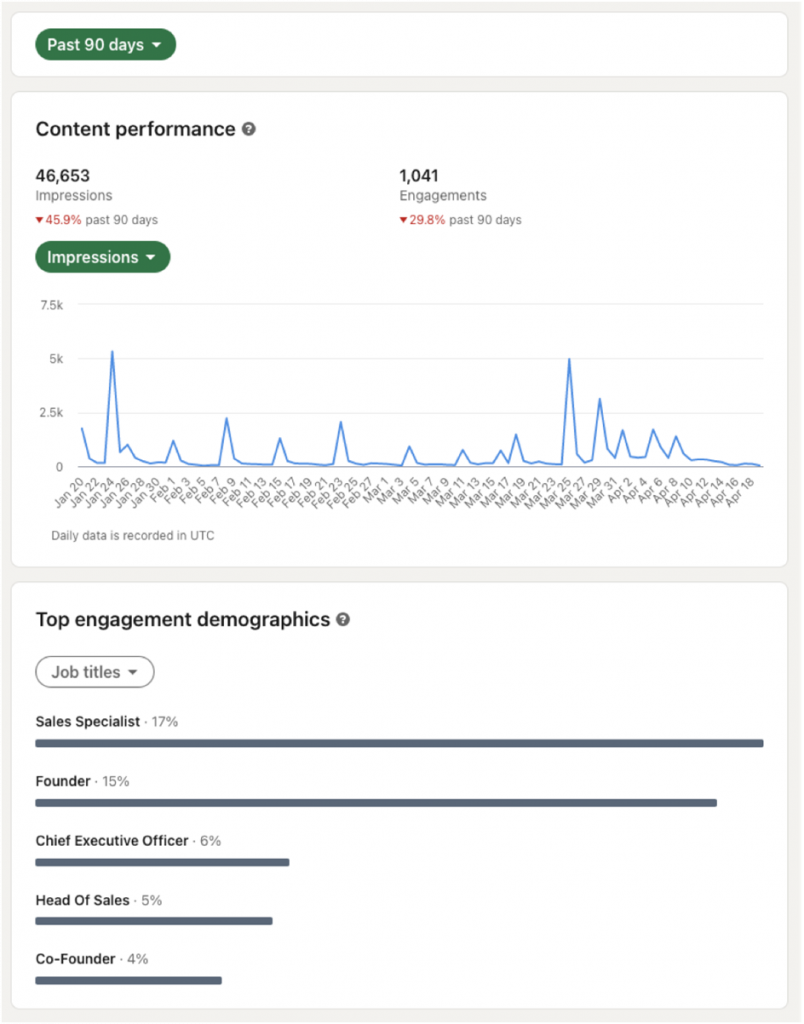
Measure audience quality
Look at job roles, industries, companies, and the substance of comments where available. A smaller post read by relevant decision-makers can be more valuable than a broad post that attracts people outside your market.

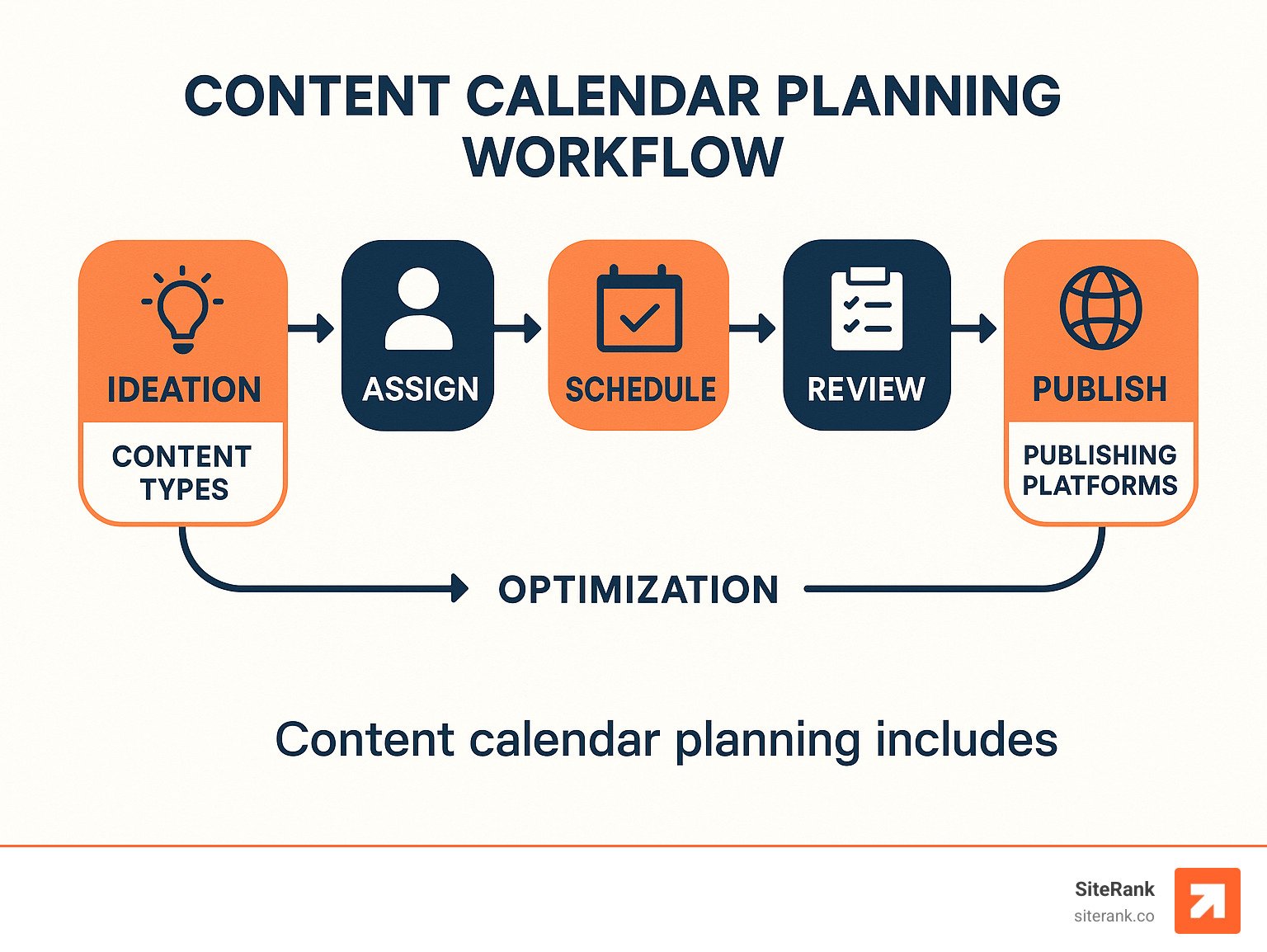
Plan content as a connected system
Use a calendar to connect short posts, deeper articles, employee perspectives, customer proof, and event content around the same buyer problem. This creates depth without repeating the same copy.
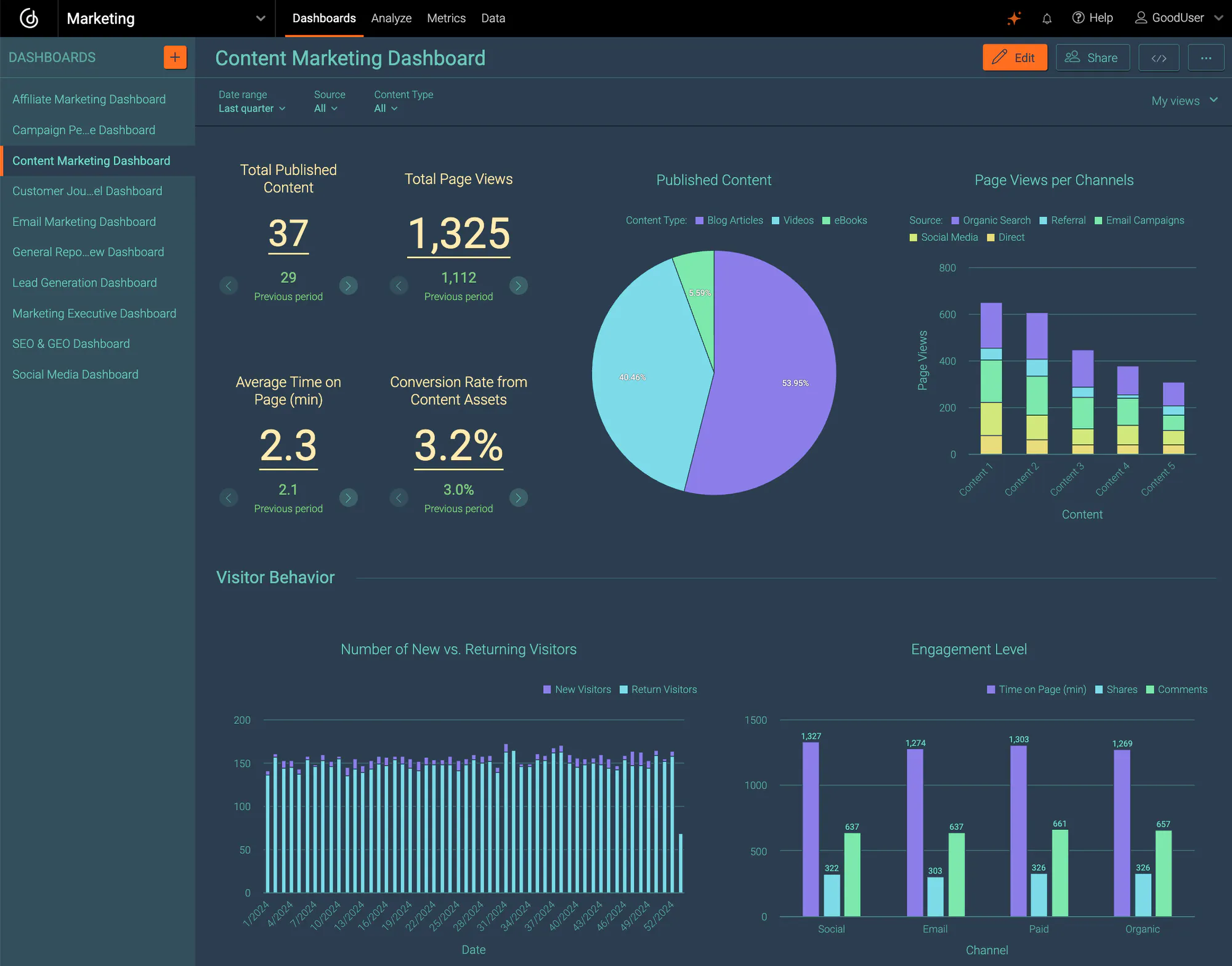
Connect LinkedIn with website and pipeline data
Track whether engaged audiences later visit product pages, subscribe, request demos, search for the brand, or enter qualified sales conversations. Use campaign parameters when appropriate, but remember that many B2B journeys include several touches before conversion.
Review the qualitative signals
Save the questions buyers ask in comments and DMs. Note which claims create thoughtful disagreement and which examples people reference later. These signals reveal where your audience needs more detail and can guide the next article or sales resource.
Use a monthly keep, improve, stop review. Keep formats that repeatedly attract relevant people. Improve content with strong engagement but weak next-step behavior. Stop formats that consume significant effort without producing learning, trust, or demand. This keeps the strategy disciplined without chasing every platform trend.
Common LinkedIn Strategy Mistakes
- Posting on every trending topic.
- Using generic AI-generated opinions.
- Copying the same corporate message across employee profiles.
- Writing for engagement instead of buyer relevance.
- Measuring success only by likes and impressions.
- Publishing company announcements without practical value.
- Changing terminology so often that the brand becomes hard to understand.
Final Takeaway
A strong LinkedIn content strategy in 2026 is built on expertise, not volume.
Choose the problems your brand wants to own. Answer real buyer questions. Use employees and executives for genuine insight. Support claims with evidence. Write clearly. Pair short posts with deeper resources. Measure whether the right people are discovering and trusting your brand.
AI search adds a new reason to do these things well, but it does not change the basic principle. Useful professional content earns attention because it helps people make better decisions.
Build a consistent body of that content and LinkedIn can become more than a social channel. It can become part of how buyers research, remember, and validate your brand.