Content marketing has never been easier to produce. AI can help with outlines, research summaries, editing, repurposing, and first drafts. Yet many teams are getting weaker results.
That contradiction became especially clear in September 2026. A report covered by Search Engine Land, based on Orbit Media’s annual blogging survey, found that only 14% of marketers said their blogs delivered strong results. The figure was described as a 12-year low, even though AI use had climbed above 92%.
The important lesson is not that AI ruined content marketing. The survey pointed to a different problem: marketers were using proven practices less often. Original research, keyword research, influencer collaboration, paid promotion, human editing, and consistent analytics were all linked with stronger results, yet many teams had reduced those efforts.
This guide explains how to fix that. The goal is not to publish more. It is to build a content system that solves real problems, earns trust, reaches the right audience, and gives your team useful feedback.
More Content Is Not the Same as Better Content
AI lowered the cost of producing words. That is useful, but it also made generic content easier for everyone to create.
If ten competitors can publish nearly identical articles in an afternoon, another basic summary has little competitive value.
Ask what your page adds
Before writing, answer one question: what will a reader get here that they cannot get from a quick search result or an AI summary?
Possible answers include:
- A tested process.
- Original data.
- A useful template.
- An expert interview.
- Real screenshots.
- A decision framework.
- A case study with numbers.
- A clearer comparison than existing pages.
If you cannot name the added value, the topic may need a stronger angle.
Stop Starting With “We Need a Blog Post”
A weak content workflow begins with format. A stronger workflow begins with a customer problem.
Instead of saying, “We need four blog posts this month,” say, “Customers keep asking how to choose between our Basic and Pro plans. We need one resource that helps them decide.”
That problem might become a comparison article, calculator, video, FAQ, sales enablement page, or email sequence. The format follows the need.
Use a problem inventory
Collect questions from:
- Sales calls.
- Support tickets.
- Site search.
- Search Console queries.
- Reviews.
- Reddit and community discussions.
- Social comments.
- Customer interviews.
Group those questions into themes. That gives you a content roadmap based on real demand instead of brainstorming from a blank page.
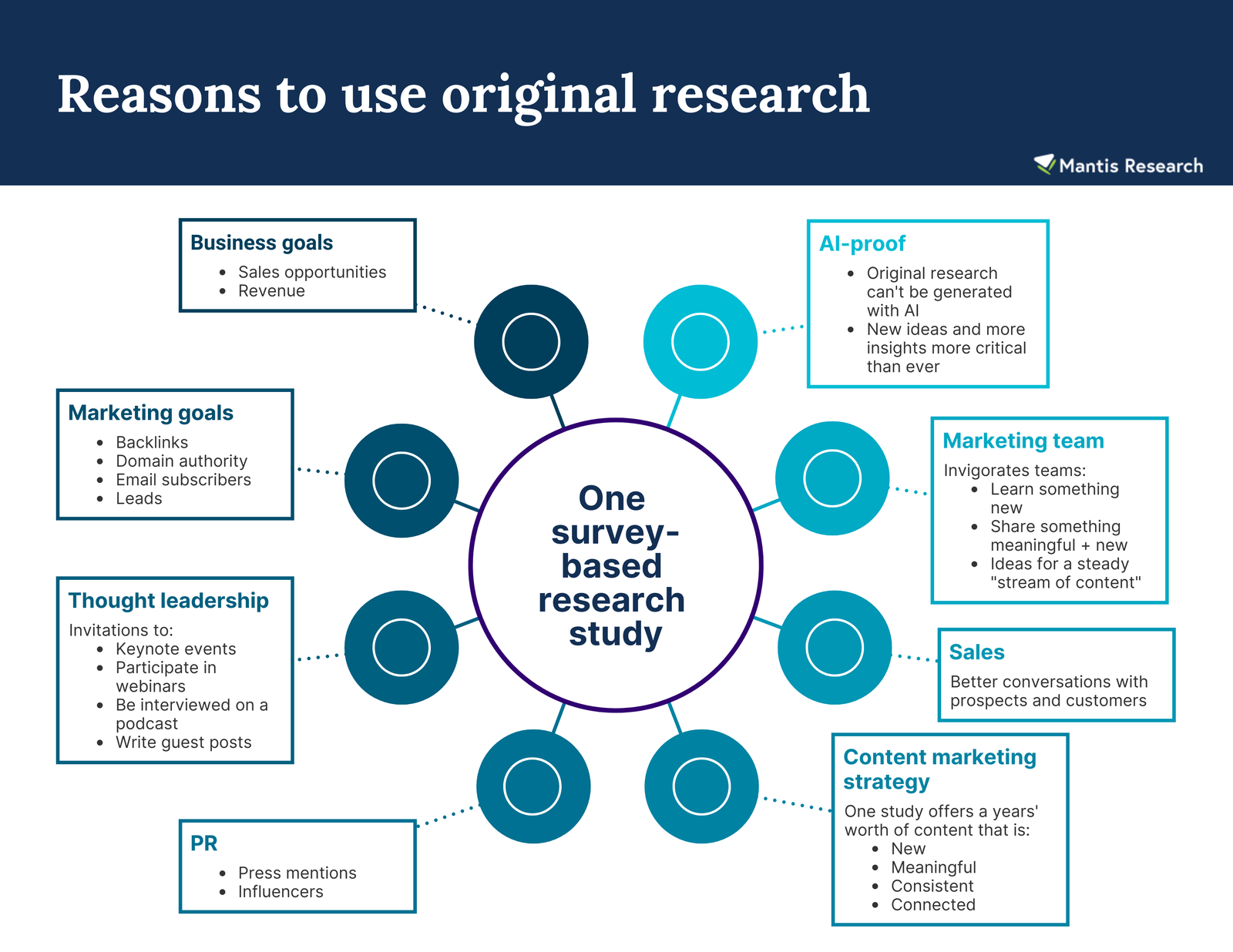
Bring Back Original Research
Original research remains one of the clearest ways to create information other sites cannot copy from a public source.
You do not need a survey of 10,000 people. Small, well-explained data can still be useful.
Practical research ideas for a small team
- Analyze 100 customer support questions and report the most common problems.
- Compare pricing or features across 20 tools in your niche.
- Survey your newsletter audience about one focused issue.
- Measure the before-and-after result of a process you changed.
- Audit 50 public websites using a clearly explained checklist.
- Publish anonymized aggregate trends from your product where privacy permits.
The key is transparency. Explain the sample, method, date, limits, and what the data can and cannot prove.
Use AI as an Assistant, Not a Substitute for Source Work
AI can speed up content operations, but it should not replace verification.
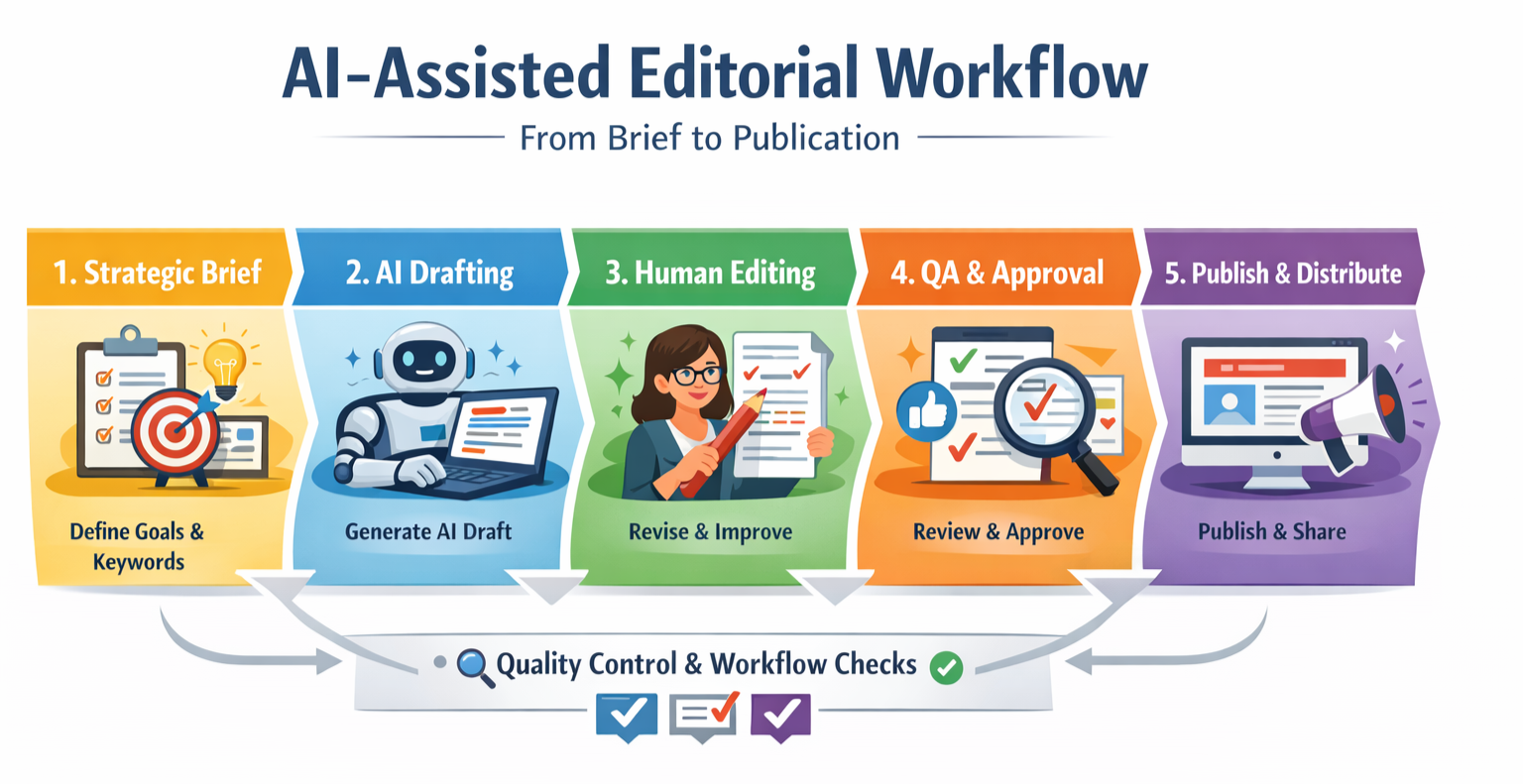
A reliable AI-assisted workflow
- Define the user problem yourself.
- Collect current primary and expert sources.
- Use AI to organize notes or generate possible structures.
- Write or edit around verified facts.
- Add real examples and original insight.
- Check every important claim.
- Have a human review the final piece.
This workflow saves time without outsourcing editorial responsibility.
Where AI commonly creates weak content
Watch for invented statistics, outdated product features, vague examples, repeated phrases, false certainty, and smooth-sounding advice with no evidence.
If a paragraph could appear on any competitor’s website after changing the brand name, it probably needs more specific value.
Make Human Editing a Real Step
Human editing is more than fixing grammar.
A useful editor asks:
- Does the introduction quickly explain the problem?
- Does every section add something new?
- Are examples realistic?
- Are claims supported?
- Is jargon explained or removed?
- Could any paragraph be deleted without losing value?
- Does the conclusion give a useful next step?
This is where content moves from “technically complete” to genuinely helpful.
Do Keyword Research Without Writing for Robots
Keyword research is still useful because it shows how people describe problems and what topics have demand.
The mistake is turning the keyword list into unnatural prose.
Use keywords to understand intent
If people search “how to reduce customer acquisition cost,” the real need may include channel efficiency, conversion rate, retention, targeting, pricing, and measurement.
A strong article should solve that broader problem. It does not need to repeat the exact phrase twenty times.
Use related language naturally
Include terms that belong to the topic because they help explain it. For customer acquisition cost, related concepts may include lifetime value, conversion rate, paid media, lead quality, attribution, and retention.
Build Content for Decisions, Not Just Traffic
Traffic is useful only when it reaches the right people and helps them move forward.
A page can attract 50,000 visits and produce little value. Another can attract 2,000 highly relevant readers who sign up, request a demo, or return later to buy.
Assign a job to each page
Common content jobs include:
- Introduce a problem.
- Teach a process.
- Help compare options.
- Build trust.
- Reduce purchase anxiety.
- Support onboarding.
- Improve retention.
Once the job is clear, choose metrics that match it.
Improve Distribution Instead of Publishing Into Silence
Even excellent content can fail if nobody sees it.
Distribution should be planned before publication, not added as an afterthought.
Build a distribution checklist
For an important article, consider:
- Emailing it to the relevant segment of your list.
- Turning key insights into LinkedIn posts.
- Creating a short video that explains one useful point.
- Sharing a chart or visual on social platforms.
- Sending it to experts quoted in the article.
- Linking from relevant existing pages.
- Using paid promotion when the audience and economics justify it.
The same core idea can travel across several formats without becoming repetitive if each version fits the platform.
Collaborate With People Who Add Expertise
Influencer collaboration does not have to mean paying a celebrity to promote a product.
For B2B and educational content, collaboration can mean interviewing a practitioner, asking an expert for a short opinion, co-creating a benchmark report, or inviting a customer to explain a real process.
Why collaboration improves content
It adds experience, perspective, and distribution. A good expert can challenge assumptions and provide examples your internal team would not think of.
Choose contributors because they know the subject, not only because they have followers.
Create Fewer, Stronger Content Assets
Publishing frequency is not a quality signal by itself.
If your team can produce four excellent resources per month or twenty generic posts, the smaller number may create more long-term value.
Use a content quality budget
Estimate the work needed for:
- Research.
- Writing.
- Editing.
- Design.
- Original visuals.
- Expert review.
- Distribution.
- Measurement.
Then choose a realistic publishing volume. This prevents the calendar from forcing weak content.
Refresh Existing Content Before Creating Another Similar Post
Many sites have old articles that once performed well but now contain outdated examples, broken links, old screenshots, or incomplete advice.
Choose refresh candidates
Look for pages with:
- Declining impressions or clicks.
- Outdated facts.
- Strong backlinks but weak current value.
- Good rankings just outside top positions.
- High traffic but poor engagement.
- Several overlapping posts on the same topic.
A strong refresh can be more valuable than adding another URL.
Use Internal Links as Part of the Reader Journey
Internal linking should help the user continue learning.
If an article explains email automation, link to a relevant guide about segmentation when the reader reaches that decision. If a comparison guide mentions implementation, link to a setup checklist.
Avoid stuffing every paragraph with links. Add them where the next page genuinely helps.
Measure Content With a Balanced Scorecard
No single metric tells you whether content is working.
Visibility metrics
Track impressions, rankings, social reach, and referral mentions.
Engagement metrics
Track engaged sessions, meaningful scroll depth, video completion, return visits, or tool use when relevant.
Business metrics
Track newsletter sign-ups, qualified leads, product views, assisted conversions, revenue, or retention based on the content’s job.
Quality metrics
Track update age, fact-check status, broken links, original assets, and expert review.
The combination is more useful than a traffic number alone.
Run a Quarterly Content Audit
Keep
Pages that are accurate, useful, and still serve a clear purpose.
Improve
Pages with demand and potential but outdated or incomplete information.
Merge
Several weak pages that solve the same problem can often become one stronger resource.
Remove or redirect
Pages with no useful purpose, no meaningful traffic, no links, and outdated information may be better removed or redirected when appropriate.
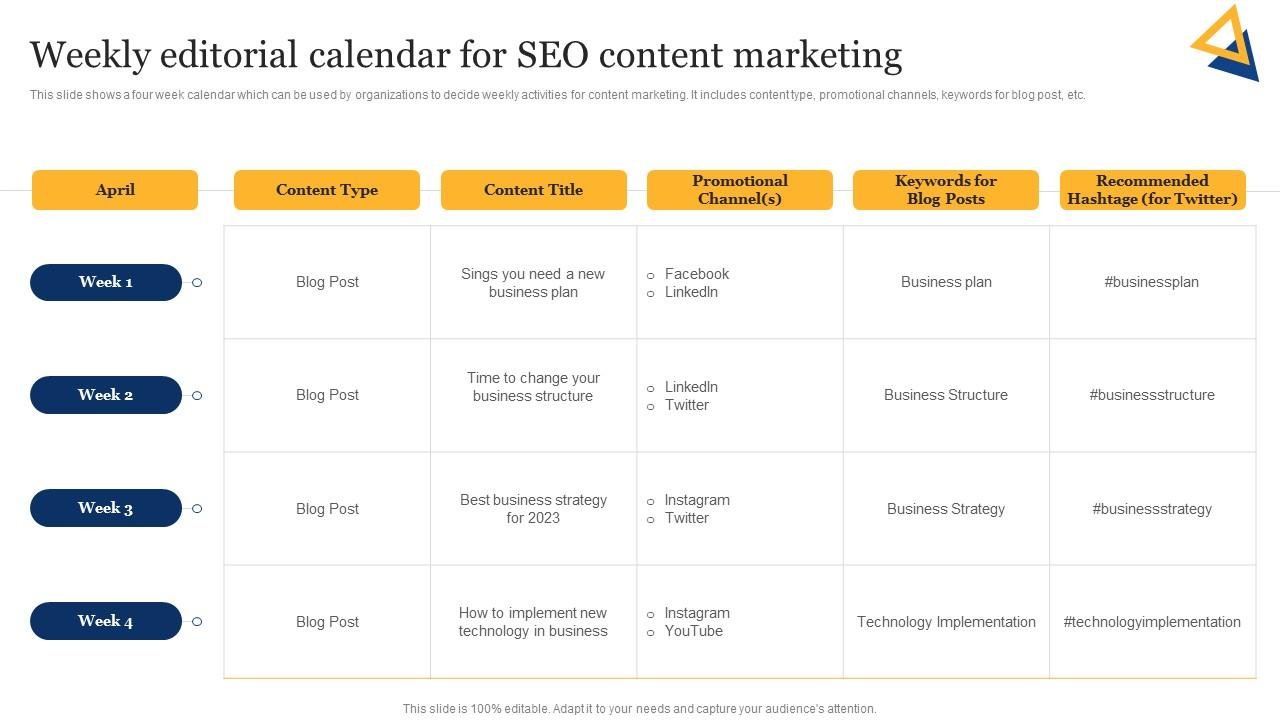
A 60-Day Content Recovery Plan
Weeks 1–2: diagnose
Audit your top 50 content pages. Identify traffic trends, update age, business contribution, and overlap. Interview sales or support staff for recurring customer questions.
Weeks 3–4: improve winners
Refresh ten pages that already have demand. Add missing examples, original visuals, current sources, and clearer next steps.
Weeks 5–6: create original value
Produce one research-based or experience-based piece that competitors cannot easily reproduce.
Weeks 7–8: distribute and measure
Repurpose the best material across email and social channels. Measure what reached the right audience and what produced useful actions.
A Practical Content Quality Control System
Teams often lose quality because nobody owns the final check. A simple quality-control system solves that without adding a long approval chain. Give every important article four short checkpoints: evidence, usefulness, readability, and distribution readiness.

Checkpoint 1: evidence
Verify each statistic, platform claim, and product detail. Link to the primary source when possible. If a recommendation comes from your own experience, label it as a recommendation rather than a universal fact.
Checkpoint 2: usefulness
Ask whether the reader can do something after each major section. A useful section may provide a decision rule, checklist, example, template, calculation, or clear next step. If a section only repeats the headline in more words, cut it.
Checkpoint 3: readability and human review
Read the draft once for clarity, not grammar. Break long sentences, define jargon, remove repeated ideas, and make headings descriptive. Then have a human reviewer check whether examples sound realistic and whether the page answers the original customer problem.
Checkpoint 4: distribution readiness
Before publishing, decide how the asset will reach the audience. Prepare the email angle, social excerpt, internal links, creator or expert outreach, and any paid support in advance. This prevents the common pattern where a strong article receives one social post and then disappears.
Finally, schedule a review date. Fast-changing platform guides may need monthly or quarterly checks, while evergreen educational resources may need a lighter schedule. A review date turns maintenance into a system instead of an emergency.
Common Content Marketing Mistakes in 2026
- Publishing AI drafts with little editing.
- Choosing topics only by search volume.
- Skipping original research because it takes longer.
- Producing content with no distribution plan.
- Measuring success only by pageviews.
- Creating new pages instead of refreshing strong existing ones.
- Using vague examples that teach nothing.
Final Takeaway
Content marketing is not failing because there are too few tools. It is struggling because many teams are replacing the hard parts of content with faster production.
The hard parts are still valuable: research, real experience, editing, collaboration, distribution, and measurement.
Use AI to remove repetitive work. Then invest the saved time in the parts that make your content difficult to copy. Solve a clear problem. Add original value. Reach the right audience. Measure the outcome. Improve what works.
That is a stronger strategy than trying to win by publishing more words than everyone else.