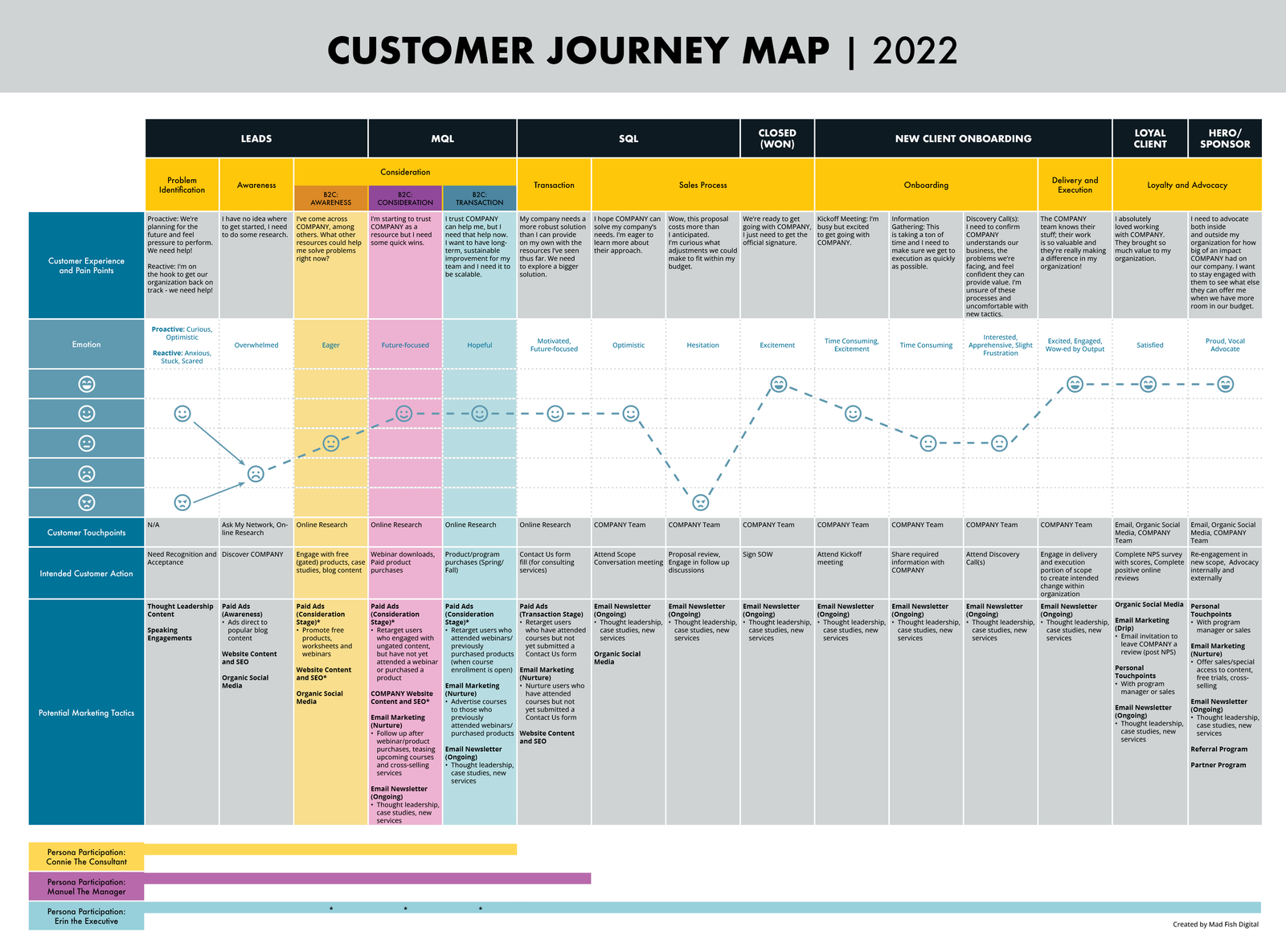
The customer journey used to look simple on a slide: awareness, consideration, purchase. Real buying behavior was never that neat, but in 2026 the gap between the old funnel and real behavior is impossible to ignore.

People now move between search, short-form video, creators, marketplaces, AI assistants, messaging apps, review sites, and brand websites. They may discover a product in a Reel, ask an AI assistant to compare alternatives, check Google for proof, message a business with a final question, and buy without following the path a marketer expected.
Recent research shows how fast this shift is moving. NIQ reported in August 2026 that 74% of shoppers use AI for product discovery. Salesforce reported that agentic search as the first step in shopping journeys grew 200% year over year. Google also describes the modern journey as a fluid loop where people are simultaneously searching, streaming, scrolling, and shopping.
This article explains what that means for a practical digital marketing strategy. The goal is not to chase every new platform. It is to make your brand easy to discover, understand, trust, and buy from wherever the customer starts.
The Funnel Is Becoming a Network of Decision Moments
A traditional funnel assumes that each channel has one job. Social media creates awareness. Search captures intent. Email nurtures. The website converts. That model is useful for planning, but customers do not respect channel boundaries.
A buyer can show high intent before visiting your website. They may ask an AI assistant, “Which accounting tools are best for a five-person design agency that needs project billing?” That single query combines discovery, comparison, and qualification. The AI response may already narrow the field to three products.
When that person later searches your brand name, they are not at the top of a funnel. They are validating a shortlist.
What changes for marketers
Instead of assigning one stage to each platform, design for decision moments:
- Discovery: Can the customer find you in search, social, creator content, marketplaces, and AI-assisted recommendations?
- Understanding: Can they quickly understand who your product is for, what it does, and what makes it different?
- Validation: Can they find proof such as reviews, case studies, pricing context, expert coverage, policies, and product details?
- Conversation: Can they ask a question without starting over?
- Action: Can they complete the next step with little friction?
These moments may happen in any order. Your marketing should still make sense when the customer enters in the middle.
AI Search Is Moving Research Earlier in the Journey
AI search changes the amount of work a customer can complete before clicking a website. A well-formed question can produce a summary, comparison, shortlist, buying criteria, and follow-up suggestions in one interaction.
Google says AI Search is reshaping customer journeys because people can ask longer, more nuanced questions and use multimodal inputs. That makes discovery more conversational and can compress early research.
Practical response: answer decision questions, not only keywords
Suppose you sell project-management software. A weak content plan targets only broad phrases such as “project management software.” A stronger plan also answers real decision questions:
- Which features matter for an agency with client approvals?
- How does time tracking affect project profitability?
- What should a small team check before migrating tools?
- When is a simple task manager enough?
- What data should a team export before switching platforms?
These questions mirror how people talk to AI systems and how they make decisions. The content should still be written for people, not machines.
Social Discovery Now Creates Purchase Intent

Short-form video and creator content are not just awareness channels. They increasingly shape what people consider buying.
Meta describes a shift from search-and-transact behavior toward scroll-led discovery supported by AI, Reels, creators, and conversational messaging. The important lesson applies beyond one country or platform: discovery and intent are merging.
Build content that helps someone take the next step
A social post should do more than attract views. Give the viewer a useful next action.
For a skin-care brand, a short video might explain how to tell the difference between dry and dehydrated skin. The caption can link to a detailed guide. That guide can explain ingredients, show a product comparison, answer safety questions, and direct the reader to the right product page.
The social asset creates curiosity. The website builds confidence. The product page makes action easy. Each piece has a clear job, but the customer can move between them without losing context.
Messaging Is Becoming Part of Commerce

Many buying journeys stop because a customer has one unanswered question. Delivery date, compatibility, refund terms, sizing, setup effort, or payment options can block a purchase even when the customer likes the product.
Conversational channels reduce that gap. Meta’s commerce research highlights messaging as a growing part of the journey, while AI assistants are also becoming capable of handling more actions.
Design a conversation handoff
Do not make users repeat everything when they move from a webpage to chat or support. Where your systems allow it, pass useful context such as the product viewed, plan selected, order number, or page source.
For example, instead of a generic message that says “How can we help?”, a software pricing page could start with “Questions about the Pro plan?” That simple change keeps the conversation connected to the decision the customer is already making.
Agentic Commerce Raises the Standard for Product Data

As AI systems begin helping users compare options and complete tasks, vague product information becomes a competitive problem.
AI-assisted commerce works best when product data is clear, structured, current, and consistent. Humans need the same thing.
Audit your product information
Check whether important pages clearly state:
- Who the product or service is for.
- What problem it solves.
- Key features and limitations.
- Price or a clear path to pricing.
- Availability and delivery terms.
- Returns, cancellation, or refund rules.
- Compatibility or requirements.
- Company identity and contact information.
- Reviews, evidence, or case studies where appropriate.
If a customer has to open five tabs to understand these basics, an AI agent may also struggle to represent the offer accurately.
Brand Trust Matters More When AI Builds the Shortlist
When customers use AI to reduce hundreds of options to a few, being known and trusted can matter before the click.
This makes brand signals more important, not less. Independent reviews, helpful expert mentions, consistent company information, credible authors, clear policies, and accurate product data all contribute to confidence.
A practical trust checklist
Make sure your website clearly shows who runs the business, how customers can contact you, what your policies are, and who created important informational content. Avoid hiding essential commercial terms behind vague language.
If you publish advice, separate editorial guidance from promotional claims. If you use testimonials, use genuine examples and explain the context. If you make performance claims, support them with evidence.
Stop Measuring Channels in Isolation
A customer may discover you on social media, research with AI, click a branded search result, read an article, and convert through direct traffic. A channel report may assign most credit to the final touch even though the journey depended on several earlier moments.
Use a shared journey scorecard
Track metrics that show progress across the journey:
- Branded search growth.
- New users reaching high-intent pages.
- Product or service comparison views.
- Qualified conversations.
- Assisted conversions.
- Repeat visits before conversion.
- Customer acquisition cost.
- Revenue or qualified pipeline.
- Retention where relevant.
These measures are not perfect attribution. They give you a better view of whether your marketing system is creating and converting demand.
Build One Useful Asset for Each Decision Moment
Small teams often think omnichannel marketing requires a large content operation. It does not. Start with a small set of assets that answer the most important customer questions.
Discovery asset
Create a short video, visual, post, or search-focused guide that introduces a real customer problem.
Education asset
Publish a practical guide that explains options, trade-offs, mistakes, and steps. Use plain language and concrete examples.
Validation asset
Create a comparison page, case study, review collection, or proof page. Include realistic constraints instead of presenting your offer as perfect for everyone.
Action asset
Make pricing, booking, checkout, sign-up, or contact steps easy to understand. Remove unnecessary form fields and unclear buttons.
Then connect these assets. The goal is not more content. The goal is fewer dead ends.
Use AI for Speed, but Keep Human Control of Positioning
AI can help marketers summarize research, generate variations, classify feedback, suggest creative angles, and automate repetitive work. It should not decide your brand promise without oversight.
Your positioning depends on customer insight, product truth, competitive context, and business strategy. Those inputs require judgment.
A safe workflow
- Start with verified customer and product information.
- Use AI to generate options, not final truth.
- Have a human check claims, tone, examples, and legal or policy risks.
- Test content with real performance data.
- Keep what improves useful outcomes.
This approach gives you speed without turning the brand into generic machine-written copy.
Plan for Multimodal Discovery
People increasingly search with images, voice, and longer conversational prompts. Google has reported strong growth in multimodal behavior inside AI search experiences.
That means a text-only marketing strategy leaves gaps.
Make important information visible in more than one format
For a product, use clear images, descriptive alt text, useful captions, specifications, and short demonstration video. For a service, show process diagrams, screenshots, before-and-after examples where appropriate, and real outcomes.
Do not create visuals only for decoration. A useful image should help the customer understand something faster.
Create a Journey Map From Real Customer Questions
Instead of inventing personas in a meeting, collect actual questions from sales calls, support chats, site search, reviews, social comments, and keyword data.
Step 1: collect 50 questions
Group them by discovery, comparison, trust, setup, price, and post-purchase needs.
Step 2: identify missing answers
Mark questions that are not answered clearly on your website or other owned channels.
Step 3: assign the best format
A pricing objection may need a comparison table. A setup question may need a video. A broad educational problem may need a long guide. A quick product question may need a message flow or FAQ.
Step 4: connect each answer to the next action
Every asset should help the user continue. An article can link to a calculator, demo, product page, checklist, newsletter, or related guide depending on intent.
A Practical 90-Day Plan
Days 1–30: fix discovery and trust
Audit your brand information across your website, social profiles, major directories, marketplace pages, and review platforms. Update outdated product details and policies. Identify the customer questions that appear most often.
Days 31–60: build connected content
Create or improve one strong asset for each major decision moment. Repurpose useful ideas into short-form video, social posts, email, and sales material rather than producing unrelated content for every channel.
Days 61–90: improve conversation and measurement
Reduce friction in contact, checkout, booking, or sign-up flows. Track qualified actions and revenue rather than only clicks. Review journeys that converted and journeys that failed. Use those patterns to decide what to improve next.
Common Mistakes in the AI Customer Journey
- Chasing every platform: be strong where your customers actually research and buy.
- Publishing generic AI content: generic summaries do not build trust or differentiation.
- Hiding important details: unclear pricing, policies, or product facts slow decisions.
- Optimizing only for the last click: earlier discovery and validation may be doing essential work.
- Using chat without context: forcing customers to repeat their problem adds friction.
- Ignoring post-purchase experience: support, onboarding, retention, and reviews influence future discovery.
When reviewing this journey, also look for repeated questions across channels. If customers ask the same pricing, compatibility, or trust question in search, social comments, and chat, answer it consistently everywhere instead of treating each channel as a separate problem.
Final Takeaway
The customer journey in 2026 is not disappearing. It is becoming faster, more connected, and less predictable.
Your job is not to control every step. Make your brand useful at the moments that matter. Be discoverable in search, social, and AI-assisted research. Provide clear product information. Build trust with evidence. Make conversation easy. Remove friction from action. Measure business outcomes across the whole system.
Brands that do this will not need to guess which single channel “owns” the customer. They will build a journey that still works when the customer chooses the path.