Multilingual Social Media Moderation: Serve Global Communities With Care
A global audience needs more than words
One post may get replies in English, Hindi, Arabic, French, and Spanish. The same short reply can mean new things in each place. Slang, jokes, and local norms can change the tone. A clear plan helps a team reply with care. No one person knows each culture. Start with languages your team knows well. Tell readers when a reply may take longer. Do not promise 24-hour help if no trained staff can reply. An honest limit beats a fast but wrong reply on a key issue.
Map where the conversations happen
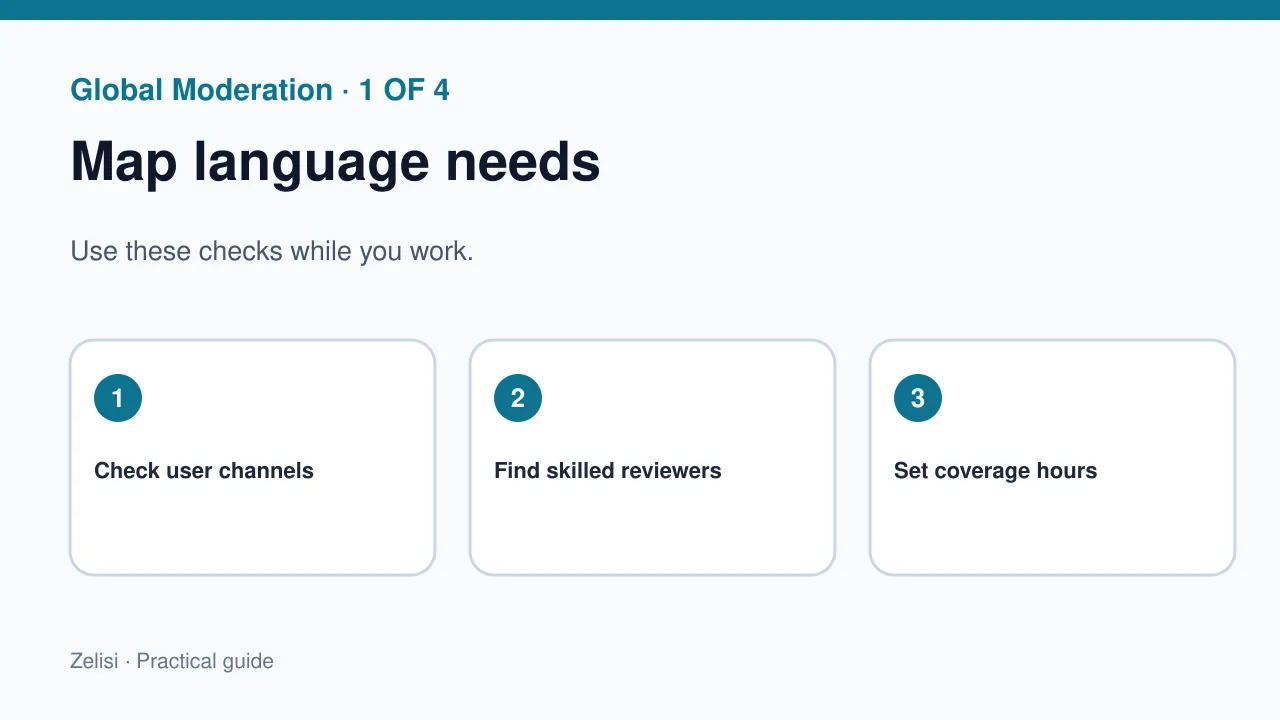
Check which languages and apps people use to ask for help. Check posts, private messages, and help tickets. Keep private facts safe. More fans do not always mean more help requests. A small group may need a lot of fast help. List who can reply in each language and when they work. Include a backup for time off. Do not guess a person’s language from their name or place. Let them choose the language they want to use when the platform allows it.
Set one rule for conduct, with room for context
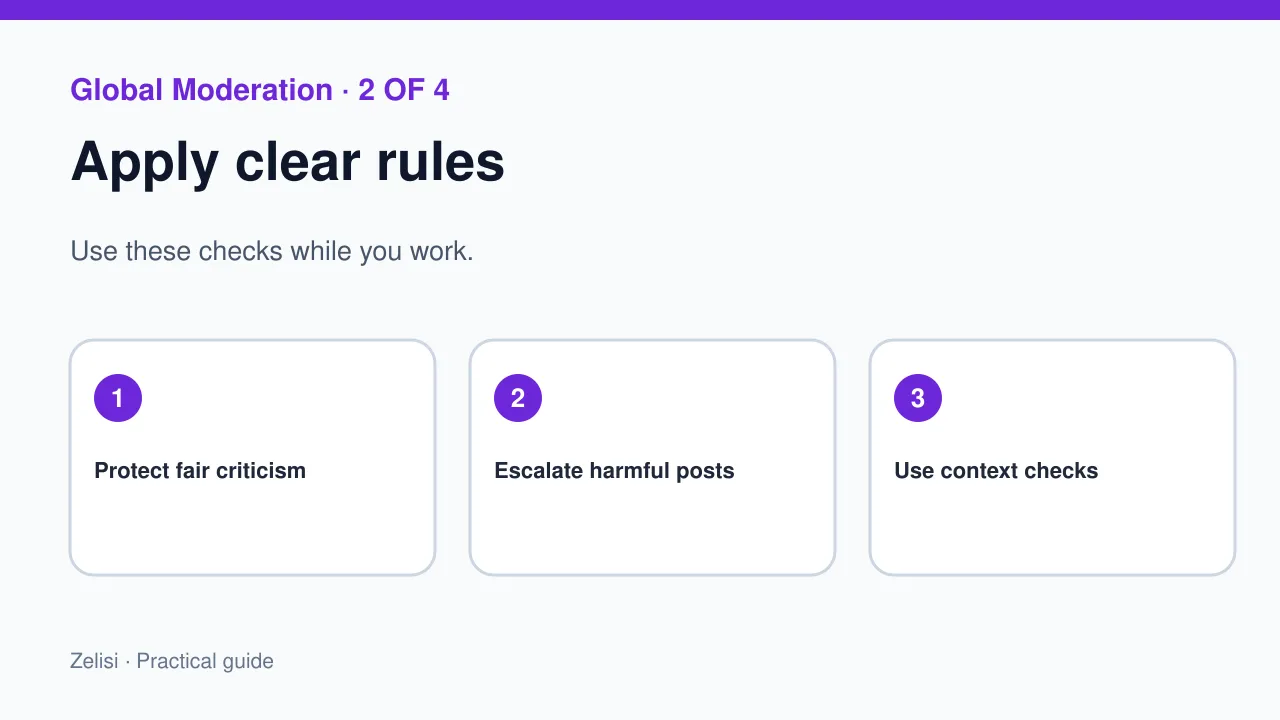
Write clear rules for threats, spam, hate, leaked data, and harm. It should also allow fair criticism. Share the sense of each rule, not just the words. A mild word in one place may be harsh in another. Ask local experts to check sample posts. Do not delete a post just because no one on shift can read it. Flag it for review when it is unclear. The team should have a way to pause and check before taking a hard action.
Use machine translation as a first look
Know when a human must check
A tool can help staff grasp the topic of a post. It may miss slang, jokes, mixed scripts, or laws. Do not let a tool alone judge a threat or rule breach. For high-risk posts, ask a trained person. Mark the tool’s text as a guide, not a true quote. Save the original words when the policy and privacy rules allow it. If you reply, ask a native or skilled reviewer to check sensitive wording. A short wait can stop a public error that takes days to fix.
Build a safe handoff for urgent issues
A report of self-harm, risk, lost money, or leaked data needs a clear route. Staff should know who handles the case, which facts to log, and what to keep private. Do not ask users to post IDs or bank details in replies. Point them to a secure support route. If the team cannot give help in the same language, explain that limit kindly and offer the best real option. Write the handoff in a way the next person can act on. Avoid a vague note such as “foreign language complaint.” State the issue and the needed check.
Keep reply templates short and flexible
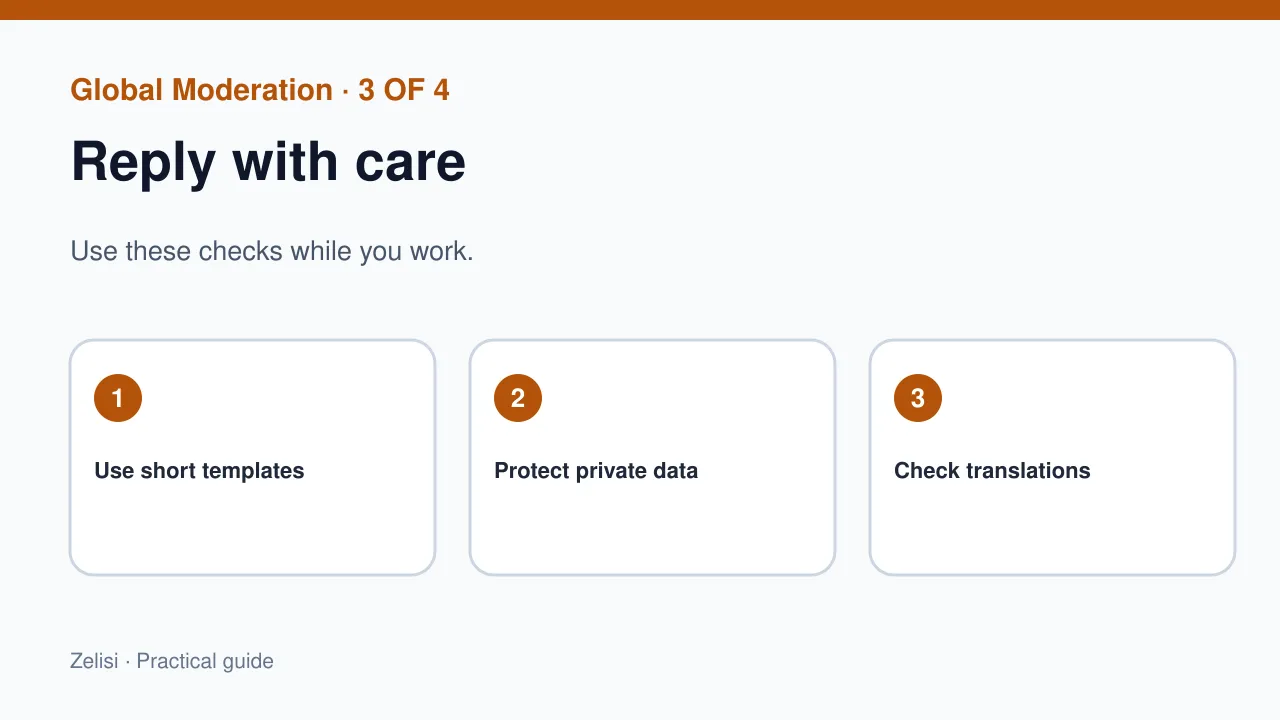
Templates help with common questions, but a word-for-word reply may feel cold or wrong in some places. Start with a short base: acknowledge the issue, give one useful step, and point to the right help route. Let local reviewers adjust tone and word choice. A refund reply may need a local rule or limit. Do not paste a generic promise that applies only in one market. Include dates and times with a clear time zone when needed. A good template saves effort without hiding the person’s actual question.
Example: a global travel brand
Imagine a travel site that gets posts about a flight change in three languages. The English team has a clear update, but some customers ask in Arabic and French. The moderator logs the common issue and asks trained reviewers to adapt the reply. The team links to one current help page and offers private support for booking details. It does not make up an answer about an airline rule it has not checked. When a local holiday slows support, it gives a fair response time. People may still be upset, but they can see the brand is trying to give a useful answer.
Plan for hate, threats, and false claims
A global brand needs rules to keep staff and users safe. Keep evidence of serious threats through a secure process. Escalate when safety or law may be involved. Avoid public fights with trolls. For false claims, check facts and cite a clear source. Do not call a claim false just because the brand disagrees. Use the same core standard across languages while allowing local context to shape how it is applied. Record why a major moderation action was taken so the team can review it later.
Make accessibility part of the plan
A reply should be easy to read on a phone. Use plain words and short sentences. Add captions to videos and helpful alt text to images. If a post has vital information in an image, put it in text too. A translated caption may be easier to use than a graphic full of tiny words. Check that the brand’s help route works with screen readers and common mobile browsers. Do not assume that a translated post is accessible just because it has the right language. People may have more than one access need at the same time.
Measure support quality, not language rank
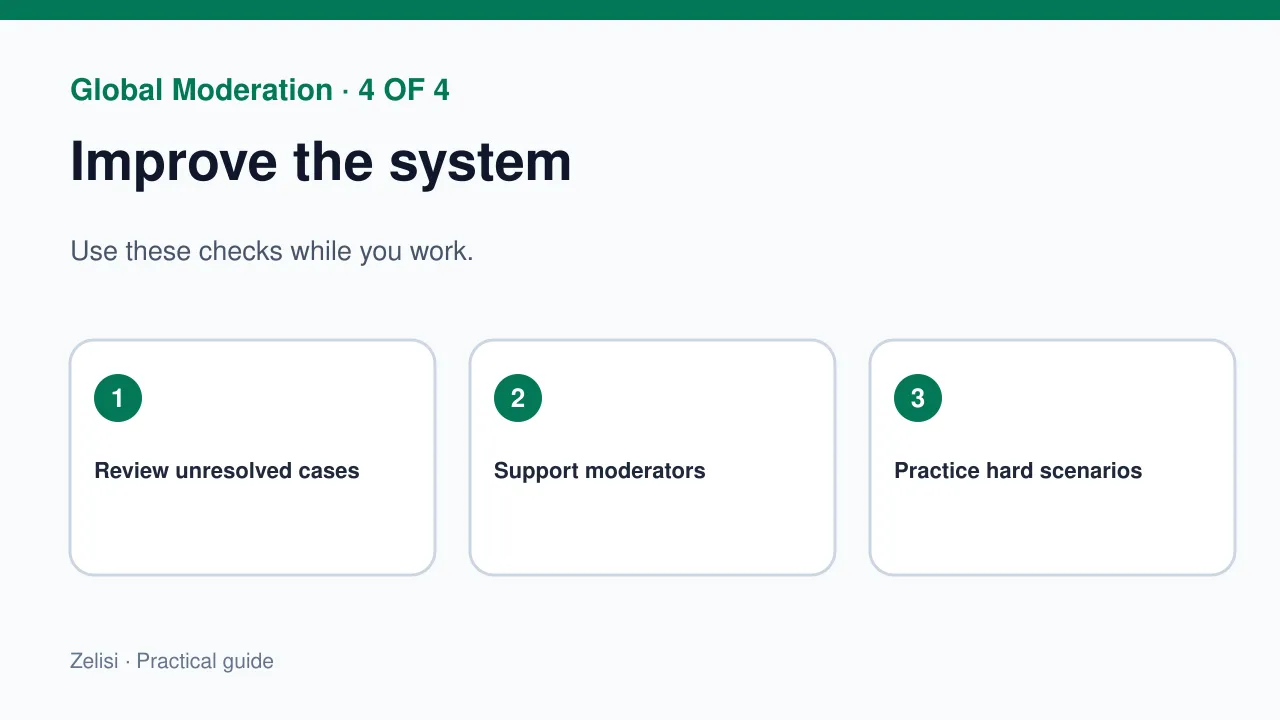
Do not rank languages by the number of likes they bring. Look at whether people got a useful reply, whether urgent cases were sent to the right team, and whether rules were applied fairly. Review unresolved cases and repeat questions. A high volume of replies can hide poor answers. Track response time only alongside quality. A fast wrong translation is not a win. Ask local reviewers where templates cause confusion. Use this feedback to change the process, not to blame one language group for needing more help.
Protect moderators from overload
Staff safety is part of quality
Reading abuse in many languages can be tiring. Use shifts, clear escalation rules, and breaks. A moderator should not have to translate a serious threat alone at midnight. Give staff a way to report harmful content and get support. Do not demand that one multilingual worker cover every channel without backup. Train managers to respect the judgment of local reviewers. If a phrase is unclear, ask before acting. A healthy team can make better calls than an exhausted one that feels pushed to clear every queue as fast as possible.
Test the plan with a short drill. Ask one teammate to write a safe mock comment in a language they know. Have a second person route the post to the right staff. Check the handoff note. Did it keep the real issue clear? Did it avoid private data? A small drill can show gaps before a real case comes in.
Review the rules with real examples
Run a small practice session. Use safe sample comments in each supported language: a normal question, a fair complaint, spam, and a high-risk report. Ask the team to choose an action and explain why. Compare results and improve the guidance where staff disagree. The W3C Internationalization resources help teams think about language and script support on the web. They do not replace local cultural review. Keep the policy short enough to use in a live queue. The aim is fair, clear help for readers across regions, with the humility to ask when meaning is uncertain.