Customer Win-Back Email Strategy: Give Former Users a Real Reason to Return
Win-back starts with a reason to return
A person may stop using a tool for many reasons. Their need may have changed. The price may no longer fit. A feature may be missing, or a support issue may have hurt trust. A win-back email should not assume the person forgot the brand. It should help them decide if a return makes sense. Start with known reasons for leaving. Keep the message honest and easy to leave. The aim is to help, not fill an inbox until someone clicks.
Check who may be contacted
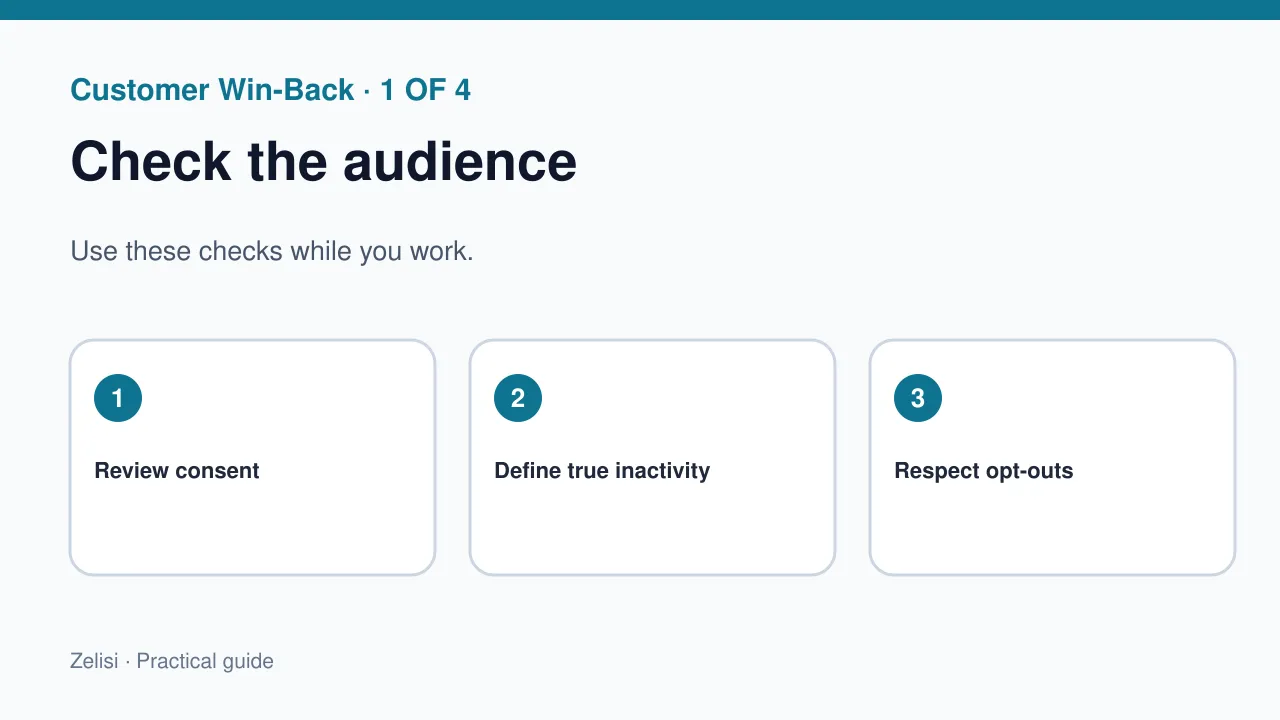
Before you choose an offer, check consent and local rules. If a person opted out, leave them out. A past payment does not change that. Keep a clear record of the allowed purpose and any opt-out. Remove old or bad emails based on the site’s rules. Do not buy a list of former customers. It can harm trust and make mail harder to send. Write only to past users who can still get these emails.
Set a clear rule for past users
A course site may flag a learner after a term with no lessons. A seasonal tool may be used only twice a year. A daily task app has a new pattern. Do not set one thirty-day rule for every product. Look at what a healthy use cycle means. Keep ex-paying users apart from those on a free plan. A person who had a refund dispute may need support, not a coupon. Group people by their real account state. Keep the rules simple enough that staff can explain why a person received the email.
Find the reason before writing the copy

Use support notes, exit feedback, app changes, and user asks to shape the note. Do not pretend to know why a person left. “We saw you stopped because the app was hard to use” may feel intrusive and may be wrong. A safer line is “Setup now takes less time.” Say what changed and link to a clear explanation. If the business has not fixed the old problem, a discount may not help. Give people a real new reason to try again.
Write one clear message first
One useful message beats a loud pitch
Start with the most useful news. A former user may want a lower price, a new tool, or better help. Keep the subject line true to the email. Do not use “Your account will close today” unless that is accurate. The body should give the reason, one next step, and a way to opt out. Skip the brand story. Show what the person can now do. Avoid a fake personal message from a founder if it is really a mass campaign.
Use offers with care

A lower price may help. Yet do not teach users to quit just to get a deal. Check the cost and terms. A free trial extension may fit a tool with a steep learning curve. A short setup call may fit a service that needs guidance. If a tool was broken, fix it first. State who can use the offer, when it ends, and any limits. Do not hide the rules behind a bright button. A fair deal has no hidden catch.
Example: a small language app
Imagine a language app that lost users after its lesson planner became slow. The team fixes the planner and makes a short demo. It sends one message to eligible former users who had chosen to hear from the app. The email says what changed, shows a simple screen, and offers a link to try a lesson. The message does not claim that everyone left due to the same bug. A week later, the team reviews whether people started a real lesson and came back for another. It does not count an open alone as proof of success.
Space messages in a respectful way
A win-back plan need not send ten emails. For many services, one good message and one helpful follow-up may be enough. Decide the timing by the product and the user’s normal use cycle. Stop when the person opts out, replies with a concern, or takes the action you wanted to help. Do not keep sending the same offer after it expires. If a user asks to be left alone, that choice is more important than the campaign calendar. A quiet exit can protect the chance of a fair future relationship.
Measure return value, not just clicks
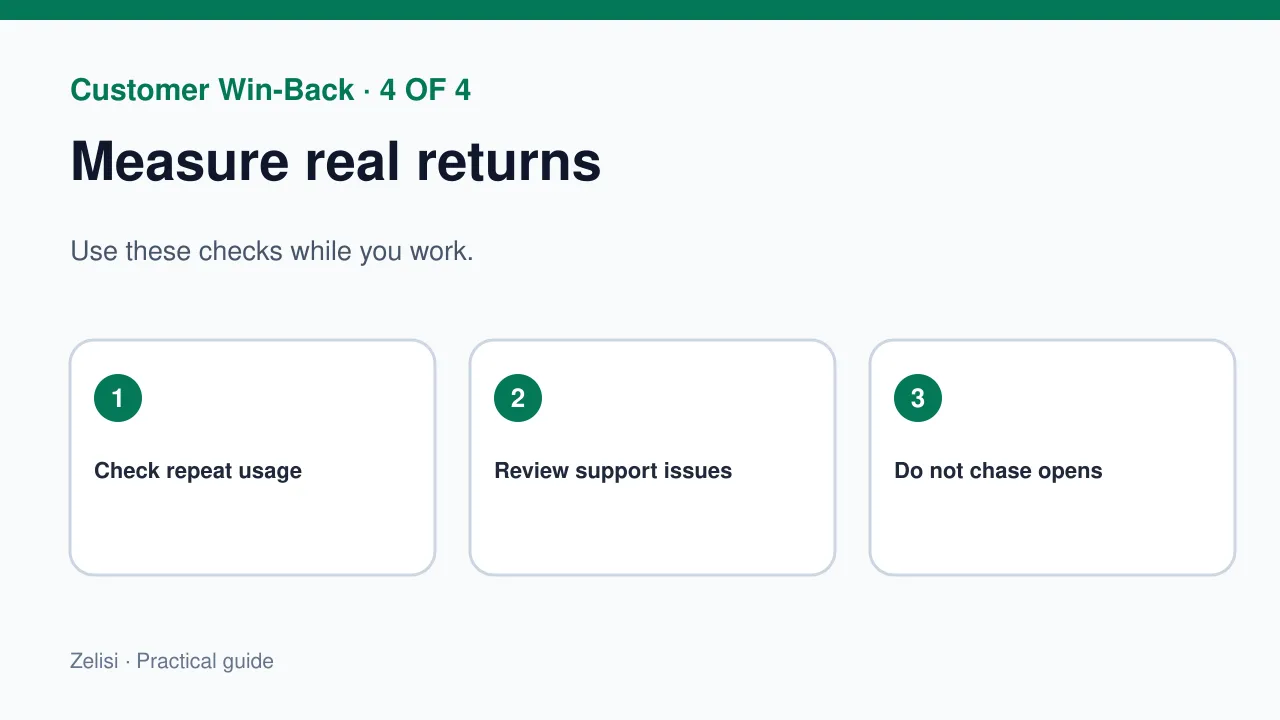
Track whether a person completed a meaningful action after returning. That might be a paid renewal, a finished lesson, or a real booking. Compare the cost of the offer with the value gained. Watch refunds and support requests too. Lots of clicks can hide a poor user experience. The old bug may still be there. Avoid giving all credit to the email when a product change or support call may have driven the return. Use a fair comparison group where practical and check the trend over time.
Keep the technical setup sound
Check both the email and landing page
Email authentication, list quality, and clear unsubscribe routes matter. Test the message on mobile and in common inbox apps. Avoid an image-only email that hides the main offer when images are blocked. Use a plain-text version. Check that links reach the right page and that any code works. The Gmail sender guidelines describe practices that can help senders manage authentication and unwanted mail. They do not guarantee placement in every inbox. Keep the email useful enough that a reader wants to receive it.
Learn from people who do not return
A campaign may not bring back many users. That result can still teach the team something. Perhaps the product no longer fits their needs. Perhaps the new offer does not fix the old problem. Review feedback without assuming silence means dislike. Give former users a clear support path if they have an open issue. Do not send a survey to everyone who chose not to hear from you. Use data you already have permission to review. A win-back process should help the business improve its service, not just push the same pitch in new words.
Here is a quick way to test a win-back note. Send it to a small group first. Make sure the link leads to the right page. Check that the offer still works. Ask a teammate who did not write the email to read it. Can they tell who the deal is for? Can they find how to leave the list? If the answer is no, fix the email before the full send. Keep a record of what changed.
A final check before sending
Read the email as a former customer who has little time. Is the reason to return clear? Does the claim match the product today? Are any limits easy to see? Does the message respect the person’s choice? Test links, offers, opt-out, and the actual return path. Then send to a small eligible group first. Watch for complaints and support issues before expanding. A good win-back campaign makes one honest invitation. It gives the person a useful reason to act and a simple way to say no. That is a better base for trust than a forced sense of urgency.